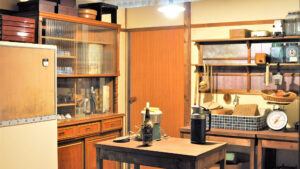


Have you ever listened to what your home is trying to say?
30 years old.
Yes, the house is still livable. But how many more years can it keep going?
For 30 years, your home has stood by you and your family without complaint. Through rain, wind, scorching heat, and bitter cold, it has endured in silence.
It may still be standing, but have you considered how much longer it can keep holding on?
Have you noticed the signs of fatigue that suggest your home might be nearing its limit?
Inoue Koumuten’s idea of “Japanese House Age” is simple
A house ages twice as fast as a human being.
If you translate that into human years, it looks something like this:
| House Age | Condition |
|---|---|
| ~10 years | Young and energetic, full of potential |
| 20 years | In prime working years, but internal wear begins |
| 30 years | Signs of aging appear, regular checkups become necessary |
| 35 years | Aging accelerates, assistance and care (repairs and renovations) come into view |
| 50 years〜 | Can be preserved with care, but neglect leads to collapse |
| 100 years〜 | May hold historical value, but maintaining it requires financial resolve |
Just like people, some homes are born sturdy, while others are more fragile.
And even among the sturdy ones, those that have been cared for since youth differ greatly from those that have been pushed hard without concern. Around the age of 40, the difference in health begins to show.
Yet, because youth can mask decline, it’s easy to overlook. Even if you sense something is wrong, you might still believe, “I’ll be fine.”
Each person’s mindset and actions shape their health outcomes. So you can’t simply say, “Because you’re 40” or “Because you’ve reached 60,” and expect everyone to fit the same mold.
But homes age in much the same way.
At around 30 years, a house is like a person turning 60. Even if it looks young on the outside, the wear and tear inside has been quietly accumulating.
Whether you notice that or not will determine how long your home can continue to support you.
That’s why your house needs a health check.
It’s not about “Can I still live here?” It’s about “How do I want to live here from now on?”
Cars are maintained by law
Homes, if left alone, quietly fall apart.
Cars and motorcycles are required by law to undergo inspections. Why? Because they are moving masses of metal that can pose danger to others.
If you drive without maintenance, the risks are obvious. That’s why inspections are mandatory every two years.
But homes don’t have that. Why? Because they don’t move.
A stationary house rarely causes trouble for others. Unless a wall collapses and damages a neighbor’s property, most issues stay within the home.
That’s why the government doesn’t force inspections. It’s entirely up to you.
With cars, you check the engine oil, filters, brake pads, timing belts, and more. If you care for it, it will run for years.
But if you neglect it, the engine may seize and the car could be scrapped.
Homes are even quieter. They don’t move, they don’t make noise.
That’s why it’s hard to notice when something’s wrong. Unless you actively pay attention and care for it regularly, aging will creep in and the house will start to falter.
- The roof base rots, and leaks won’t stop
- Cracks in the foundation worsen, and floors begin to tilt
- Pipes clog, and water stops flowing
- Insulation fails, turning summers into furnaces and winters into freezers
- Termites eat away at pillars, threatening structural integrity
These problems don’t appear overnight. They’ve been building up for years.
But because there’s no mandatory inspection system like a car’s, no one noticed.
Your home has witnessed it all
Laughter, joy, sorrow, and hardship. It has stood by you through every chapter of life.
If you want to keep living in this house, If you hope to journey through life together until the end,
Then ask yourself: How much respect have you shown this partner?
Now is the time to listen to what your home is trying to say.
A “home health check” is the first step toward securing your future together.
30 years is not a signal of survival. It’s a turning point to ask, “How do I want to live here from now on?”
Inoue Koumuten listens to homes
We are interpreters of your house’s voice. Our mission is to help you understand what your home is saying, And to find the best path forward that aligns with your values.
After the diagnosis, there are many options. Each one could be the right answer.
What matters most is that you understand your home’s condition, And make a choice you truly believe in.
Your home is your final fortress. Wouldn’t you like to know what shape it’s in?
Let’s begin the strategy meeting to extend your home’s life, right here.
If you’re ready to hear what your home has to say, get in touch with us.
Contact Information
We may be on-site and unable to answer immediately. And also, to avoid any misunderstandings or miscommunication, please contact us first via LINE or email. This helps us keep a clear record and respond accurately.
LINE / Email: Reach us anytime – we’ll reply as soon as we’re off-site.
LINE

Click the button on the left and add INOUE KOUMUTEN as a friend before sending your inquiry.
We’ve prepared two forms to better match your situation. Choose the path that suits your home journey, whether you already own a property or are planning to build.